
The Impact of Opening the Chinese Mainland University Campus to the Public on Students and Policies Respectively
Abstract
While previous studies have contributed to the university campus layout outside of China, the current study investigated the impact of opening the Chinese mainland university campus to the public on students and the willingness and purposes of the public to visit the campuses in China to infer why Chinese people prefer to do that. By handing out a questionnaire, the results show that no evident impact could be found, which may be because of the complementarity. Moreover, the top visiting purposes are landscape viewing and experiencing the university atmosphere. Nevertheless, the opening could bring about several concerns. In response to that, some suggestions are provided in the paper.
Keywords: open university campus, China mainland, willingness & purposes, concerns, suggestions.
Introduction
University campuses are regarded as public common resources with massive value in academic, commercial, and landscape viewing. Gumprecht (2007) enumerated university campuses’ 3 functions as a landscape park, a social and cultural center, and a symbol. All these functions play a crucial role in public. However, it may disrupt students’ living. Ali and Kim (2020) reported that most students at Cairo University believed that an open campus negatively impacted their lives.
Previous studies investigated building planning on campuses without gates, which is inconsistent with China's conditions. They focused on the relationship between universities and cities. Also, they focused on citizens' perspectives and concentrated predominantly on what the university could bring to citizens. However, the opinions of students, staff, and property management personnel are also important.
This research aims to determine whether and how to construct an open university. By understanding the views of different personnel, this study handed out a questionnaire to collect data and analyze why the public wants to visit the campuses and what the consequences will be. Based on the findings, suggestions for the campus opening policies were provided.
Literature Review
Rashidi (2013) emphasized the significance of the relationship between the University campus and the city. He stated that the socio-cultural functions of public open spaces consist of the value of, needs in, and rights in public space and that the university campus was a public space in the city. Moreover, many researchers are focusing on building planning. According to Lin (2014), while Venini designed the UBC campus as a pedestrian campus, the campus designer of SFU’s Burnaby campus tried to figure out the potential of shared space.
However, according to Ali and Kim (2020), the survey suggested that most residents outside and students believe that the campus should not be open to the public due to the limited budget, high population density, and anti-terrorism reasons, even though the disagreement rate among residents is lower than that of students. Technically speaking, one-third of the students and a quarter of residents did not agree with opening, especially for special regions such as Zaafaran Palace (Administration Region), Green Spaces, or the action of taking down fences.
Also, the researchers noticed that the universities prefer establishing membership-fee-paying spaces, which might help fight against misbehavior and bring revenue to the universities. Many universities in Hong Kong S.A.R. implement a membership system for gyms. According to the official website of Hong Kong University (HKU, 2024), every student, staff, and alum can take at most four people using sports facilities for HK$30 per visit/hour. Similarly, The Chinese University of Hong Kong (CUHK, 2024) also has a fee regulation for sports facilities.
Previous studies discussed building layouts or countermeasures and investigated people’s opinions outside China. To bridge these research gaps, this research manages to figure out the actual impact of the policies on students and seeks a better solution to this problem for Chinese universities.
Research questions
The research questions that guide the study are:
- What is the public’s willingness to visit the campus and the purposes for doing so?
- What is the impact of campus opening on students?
- How can we construct an open campus by making better policies?
- How can we construct an open campus by designing a better streamline?
Methods
Participants
Three hundred twenty-four informants returned the questionnaire, with 26.85% (87) of university-related staff and students and 73.15% (237) of others. 24.38% (79) are aged 18-22, and 41.98% (136) are aged 41-50. Some university-related personnel (10.8%) have experience working or studying abroad. Moreover, for the residual part, most (61.11%) of them have at least one child who derived or is pursuing a college degree or above.
Data Collection and Procedure
First, our questionnaire was based on the "Survey on Opening University Campus." For the public, besides their basic information, e.g., ages and educational background, the questions are concentrated on their visiting observations, attitude and reason for visiting, and favorable open-up policies. Moreover, for university-related populations, some extra questions related to the conditions of their universities were asked. Multiple choice questions were presented for conditions and observations, with a few situations provided. Scoring questions were presented for policies, scaling from totally disagreeable to totally agreeable.
Apart from the questionnaire, the researcher counted the number of specific populations during particular periods at targeted spots, such as weekdays and weekends, at 12:00 and 17:00 on the shuffle buses and dining halls. Also, two semi-structured interviews with designers were conducted to explore the layout patterns of campuses.
Data analysis
Many statistical tools, such as Python and SPSS, were used to analyze the qualitative data. Some basic statistical methods, such as Pearson's Chi-Square Test, were used to test the correlation between variables. The dimension-reducing algorithm UMAP was used. The author transcribed the interview data and accordingly suggested the campus layout.
Results
1. The current conditions under different campuses
Eighty-seven university-related informants filled in the questionnaire in total. 45.98% (40) indicate that visitors can only visit at a specific time or place. 17.24% (15) indicate that visitors can visit any spot on their campus anytime without any appointment. Figure 1 demonstrates that students did not witness apparent congestion under current open policies.
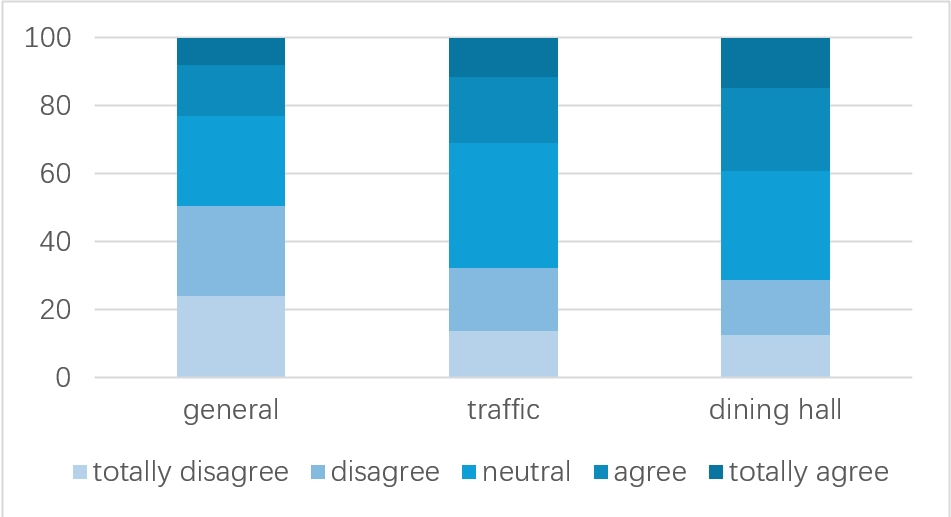
Fig. 1. The opening policies disturb students' lives regarding traffic and the dining hall.
2. Attitude towards opening-up
a) Visiting willingness and purposes
Table 1. Visiting willingness from different age groups
| 12-18 | 18-22 | 22-25 | 26-31 | 32-40 | 41-50 | 50-60 | 60~ | |
|---|---|---|---|---|---|---|---|---|
| Approval rate | 100.00 | 89.87 | 100.00 | 100.00 | 95.23 | 97.06 | 92.73 | 80.00 |
| numApprove | 11 | 71 | 14 | 3 | 20 | 132 | 51 | 4 |
| Total number | 11 | 79 | 14 | 3 | 21 | 136 | 55 | 5 |
Table 2. Approval of opening of different age groups
| 12-18 | 18-22 | 22-25 | 26-31 | 32-40 | 41-50 | 50-60 | 60~ | |
|---|---|---|---|---|---|---|---|---|
| Approval rate | 90.09 | 81.01 | 78.57 | 100.00 | 76.19 | 84.56 | 85.45 | 60.00 |
| # Approve | 10 | 64 | 11 | 3 | 16 | 115 | 47 | 3 |
| Total number | 11 | 79 | 14 | 3 | 21 | 136 | 55 | 5 |
According to the questionnaire, the relative opinions are shown in Tables 1 and 2, which show that most people support opening the campus. However, there is a minor difference in views among different age groups. People between 18 and 22 are relatively unwilling to visit other universities, while 22-25 and 32-40 age groups relatively disagree with opening the campuses. The reasons probably come from multiple aspects. The 12-18-year-old age group is going to university soon and is curious about the university. The 41 and above age groups experienced opening campus policy times. Moreover, the researcher observed slight differences between the two tables, which might have been caused by misbehavior or other reasons.
Table 3. Correlation between attitude and study life experiences.
| Correlation | Living Aboard | University-related | Highest Qualification | Children's Educational Background |
|---|---|---|---|---|
| Willingness | -0.14* | -0.01 | 0.03 | -0.02 |
| Opinion to open | -0.06 | -0.02 | 0.08 | -0.08 |
*p < 0.05 **p < 0.01
Similarly, using SPSS, we evaluated the correlation between the informants’ background or witnesses and their opinions by the Pearson Chi-Square Test. The results are shown in Table 3, which indicates no apparent correlation between the factors mentioned.
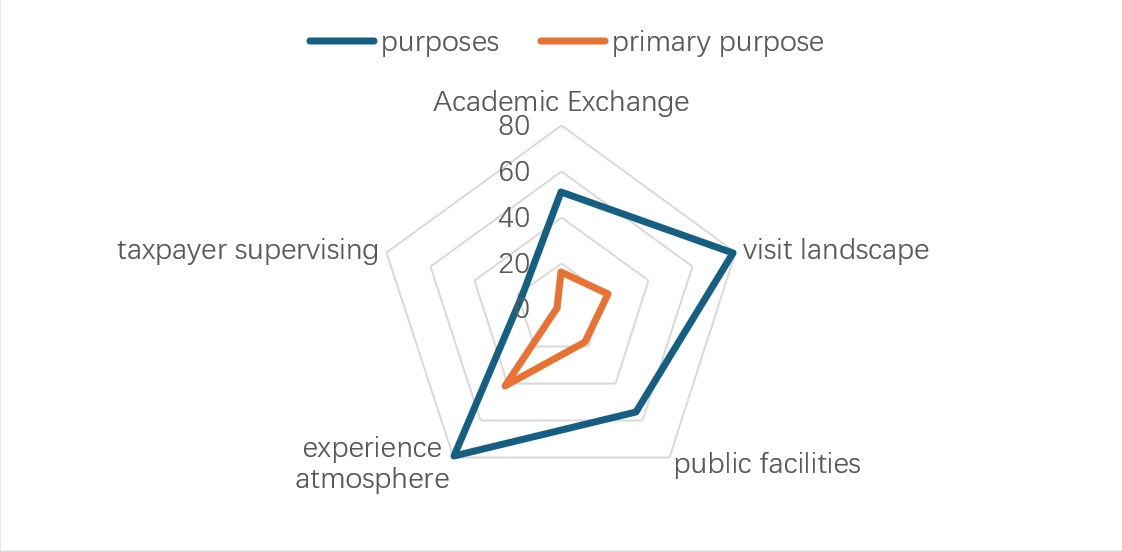
Fig. 2. Purposes of visiting the campus
Figure 2 shows that the most common (79.32%) purpose of visiting the campus is to feel the learning atmosphere, and the second most important (78.7%) is to visit the campus landscape. An interesting observation is that 17.9% (58) of people believe that taxpayer supervision is their purpose for visiting. Among that, 50% (29) are above 41 years old, which might also result from a specific time background.
b) Disadvantages of open campus
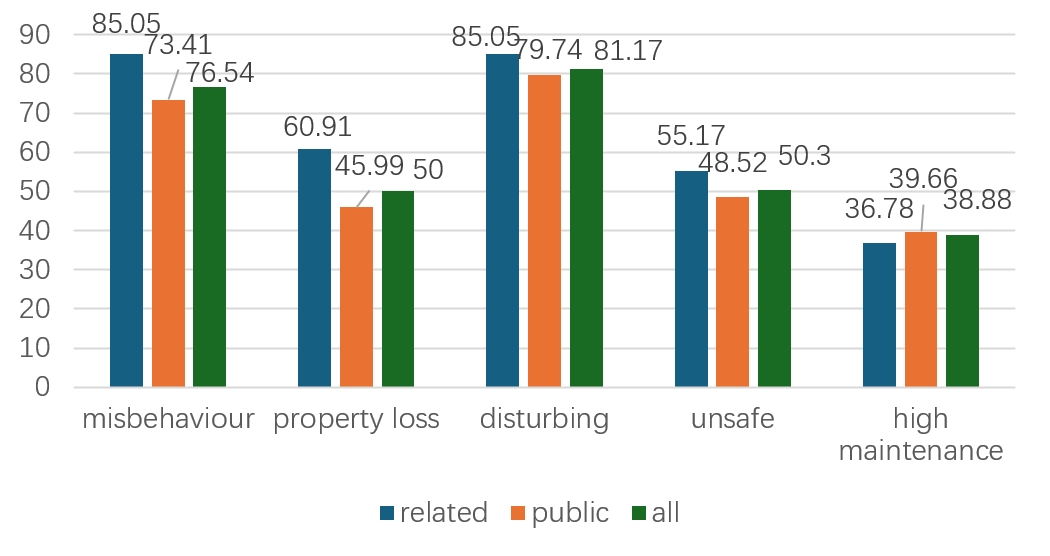
Fig. 3. Perspectives towards disadvantages of open campus
According to Figure 3, most (79.74%) people believe that opening campuses disturbs students’ study and life, although the rate from the public was lower than the university-related population. Misbehavior (e.g., littering, spitting, etc.) is the second critical negative effect, with approval rates of 85.05% from the related population and 73.41% from the public. According to the questionnaire, 62.06% of students and 49.62% of the public witnessed misbehavior on campus.
3. policies making
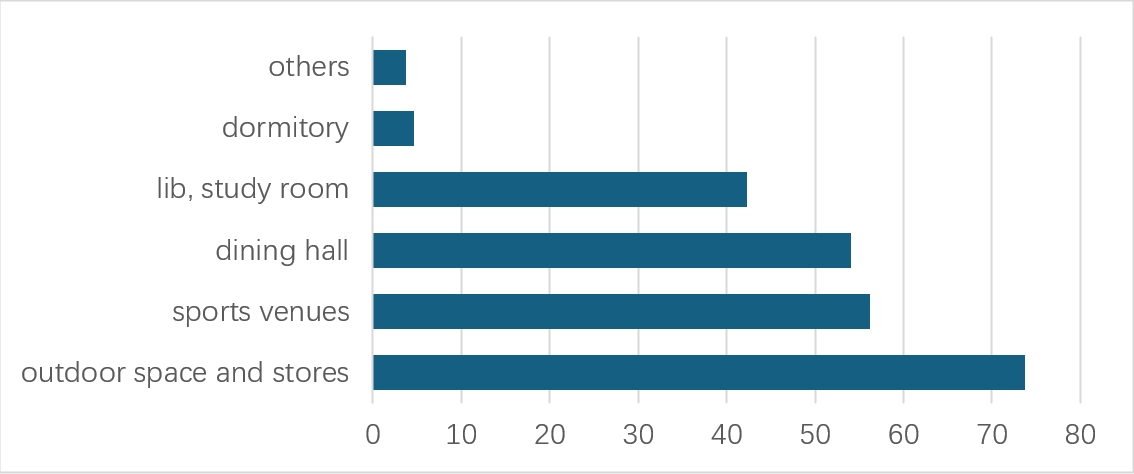
Fig. 4. Expected venues to open from the public
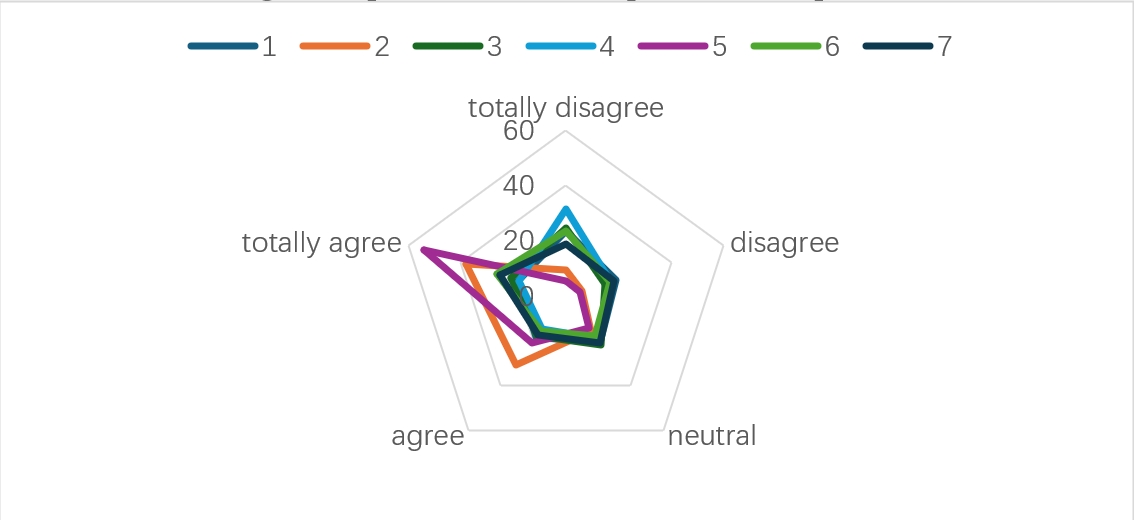
Fig. 5. Perspective towards different statements
With statements:
- No reservation is required, or the reservation policy is relaxed.
- Visitors can only enter the campus on weekends or holidays.
- Visitors can take lectures or borrow books from the library if they want.
- Visitors can enter the university gym, such as a swimming pool, tennis court, etc.
- Visitors should not drive cars onto the campus.
- Visitors cannot take the campus shuffle bus or pay for that.
- Visitors cannot use the dining hall, or at least one is for students and staff only.
Figure 4 showcases that outdoor spaces, stores, sports venues, and dining halls are the most appealing spots. The library, study room, and lecture halls are also highly wanted. From Figure 5, we observed that most statements got scores in a nearly uniform distribution. However, more than half (68.82%) of informants agree that visitors can only visit on weekends or holidays, while 3 quarters of informants agree that vehicles are not allowed on the campus. That is probably because of safety reasons and to minimize the impact on students as much as possible.
To investigate the differences between personnel on policies, the researchers leveraged the UMAP tool (Li et al., 2024) with a random seed of 42, n_neighbors of 5, min_dist of 0.05, n_epoches of 2000, taking matric as Manhattan distance and applying standardization. With 1 and 2 representing university-related and unrelated groups, Figure 6 indicates no significant difference between groups can be seen.

Fig. 6. Different clusters between personnel
4. interview: Design the streamline to release the pressure of the path
One of the ways to reduce campus congestion is to design a better streamline. According to the interviews, the campuses always have a central avenue with essential buildings on both sides, such as dining rooms and conference buildings, which can satisfy most of the general visit purposes. Moreover, some lanes are designed to let students access different venues easily without using the central avenue and release the avenue stress.
Discussion
This study has addressed different personnel's perspectives on why and how to open the campus. While previous studies revealed that students and visitors disagreed with opening the campus in Arabic (Ali, Kim, 2020), the present study found that most Chinese students and the public (83.02%) approve that the campus should always be open to the public.
Firstly, opening Chinese campuses does not significantly affect students. One of the reasons could be complementarity. The researchers counted the number of people in dining halls and campus shuffling buses during regular weekdays and weekends in CUHKSZ. Then, we observed the complementarity of students and public groups. Namely, during holidays, although lots of the public are crammed into the campus, students would prefer to return home or stay on the upper campus, where visitors cannot enter. Due to the policies, the public cannot enter the campus during weekdays. This is consistent with the questionnaire feedback.
By testing the correlation, we can also conclude that no apparent correlation could be found between the approval rate of open-up and age, educational background, and abroad experience. Most Chinese wish to visit different university campuses, and the top purpose of visiting is to experience the university atmosphere. One of the reasons is that the percentage of junior college and above is still relatively low. The university is still a shining flame in many Chinese hearts. According to the Office of the Leading Group for the Seventh National Population Census of the State Council (2020), until 2020, 154.67 million Chinese people got Junior College and Above degrees, compared with a total population of more than 1400 million.
In terms of policies, universities should make good use of the reservation system because of its complementarity. Moreover, for safety reasons, private vehicles should be strictly restricted. The university could establish a blocklist system to cope with misbehavior, rejecting people who misbehave to enter the campus again.
Researchers discovered that many universities, such as Zhejiang University and Hangzhou Dianzi Technical University, followed the rules mentioned in the interview. These rules are also consistent with the Eastern Mediterranean (Amir, 2013). The only variation is the different shapes of the central road. Zhejiang University is a square with roads distributed on four sides. Hangzhou Dianzi Technical University is a long strip with a central road in the middle. Moreover, CUHK-Shenzhen, Shenzhen University, Zhejiang University of Technology, and Zhejiang Gongshang University follow similar rules.
Conclusion
The current study supports that there is a strong demand for the opening of university campuses, which is an inevitable trend. Rather than a blanket ban, opening in order is better. The current study contributed to establishing a relatively complete policy system to respond to calls from university-related and unrelated populations. Further work could focus on gathering more data on all age groups. Therefore, an additional analysis could be conducted by collecting questionnaires from more population groups.
References
Ali M, Kim Y. (2020). Can a University Campus Work as a Public Space in the Metropolis of a Developing Country? The Case of Ain-Shams University, Cairo, Egypt. Sustainability. 12(17), 7229. https://doi.org/10.3390/su12177229
CUHK PEU. (2024). Fee Regulation. CUHK. https://www.peu.cuhk.edu.hk/en-gb/facilities/fee-regulation
Gumprecht, B. (2007). The campus as a public space in the American college town. Journal of Historical Geography, 33(1), 72-103.
Hajrasouliha, A. H., & Ewing, R. (2016). The campus does matter. Plann High Educ, 44, 30-45. https://restorativeworkplace.com/wp-content/uploads/2015/07/Campus_Does_Matter-2.pdf
HKU CSE, (2024). Guest Policy & Others Fees. HKU. https://cse.hku.hk/membership.asp?pageid=115
Li, S., Zhao, Z., Miao, T., Li, X., Yu, S., Zhang, Y., Wei, J., & Zou, K. (2024). Discrimination of Pb-Zn deposit types using the trace element data of galena based on deep learning. Ore Geology Reviews, 170, 106133. DOI:10.1016/j.oregeorev.2024.106133.
Lin, Y. (2014). Investigating Accessibility of Public Campus Spaces at the University of British Columbia and Simon Fraser University. https://summit.sfu.ca/_flysystem/fedora/sfu_migrate/20408/etd20899.pdf
Rashidi, A. (2013). University Campus as a Public Space of the City Case Study: Eastern Mediterranean University Campus. http://i-rep.emu.edu.tr:8080/xmlui/handle/11129/3333
Office of the Leading Group for the Seventh National Population Census of the State Council. (2020). Major figures on the 2020 population census of China. https://www.stats.gov.cn/sj/pcsj/rkpc/d7c/202111/P020211126523667366751.pdf#page=23.00
Appendix
Questionnaire
Survey on Opening University Campus
Hello! This questionnaire is designed to collect your opinions and suggestions on the Open campus University to help us promote a balance between students' learning and living standards and the rational use of campus resources. In this questionnaire, an open campus means that tourists can enter the university. We promise that all information will be used for academic research purposes only and will be kept confidential.
- Your age:
○12~18 ○18~22 (Or pursuing a bachelor's degree)
○22~25 (Or pursuing a master's degree) ○26~31 (Or pursuing a PhD. degree)
○32~40 ○41~50 ○51~60 ○60 and above - Do you have experience living outside of China Mainland for over a month?
○Yes, with university study experience○Yes, without university study experience ○No - Are you working in a university-related job (including a professor, university administrator, property manager, cleaner, etc.) or a student? ○ Yes ○ No
- The highest academic qualification you have obtained (or are currently studying for) is:
○High school and below ○College ○Undergraduate ○Masters' degree ○PhD. degree - Your children's educational background
○At least one child has obtained (or is currently studying for) a college degree or above
○Have children, but all of them are in high school or below
○No children - Policy of your campus
○ Visitors can visit any time spot without an appointment without an appointment or with a relaxed policy.
○Visitors can walk freely on campus and eat in the dining hall but cannot do so in other spaces.
○The previous option is met at certain times, but not most of the time (such as weekdays)
○It is challenging to make an appointment (the number of people making an appointment does not match the number of places, or the school policy is limited) - Have you seen uncivilized behavior by outsiders on campus
Never ○1 ○2 ○3 ○4 ○5 Always - The current open policy affects your study life
totally disagree ○1 ○2 ○3 ○4 ○5 Totally agree - The current open policy makes the cafeteria (canteens, vending machines, etc.) crowded
Totally disagree ○1 ○2 ○3 ○4 ○5 Totally agree - The current open policy has led to traffic congestion on campus
Totally disagree ○1 ○2 ○3 ○4 ○5 Totally agree - If you have the opportunity, would you like to visit a university campus? ○Yes ○No
- Do you think universities should be open to the public? ○Yes ○No
- What kind of universities would you like to visit?
□Full of academic atmosphere □Beautiful environment
□Any universities and colleges □Others - Your purpose for entering the university
□Academic exchanges (including but not limited to borrowing library books and attending classes)
□Visit the campus landscape (including but not limited to walking and playing with children)
□Use of university public facilities (such as the gymnasium) or participation in events (such as music festivals)
□Feel the learning atmosphere of the university
□As a taxpayer (Mainland only), I want to know where my money goes.
□Others _________________ - In the previous question, what is the primary purpose?
○Academic Exchange ○Visit the campus landscape ○Use of university public facilities
○Feel the learning atmosphere ○As a taxpayer (Mainland only), I want to know where my money goes. ○Others - What adverse effects might result from the public entering universities?
□Misbehavior of some people (littering, spitting, etc.)
□Causing losses to public or private finances (such as loss of library books, damage to public facilities, etc.
□Disturbing lectures and students' lives □unsafe □high maintenance □Others - Which places do you think universities should open?
□University outdoor space, convenience store
□Various sports venues (such as badminton halls)
□Dining hall □Library, study room, teaching building (if you can take classes)
□dormitory □Others _________________
Please fill in your level of approval for the following options. - No reservation is required, or the reservation policy is relaxed.
Totally Disagree ○1 ○2 ○3 ○4 ○5 Totally Agree - Visitors can only enter the campus on weekends or holidays.
Totally Disagree ○1 ○2 ○3 ○4 ○5 Totally Agree - Visitors can take lectures or borrow books from the library if they want.
Totally Disagree ○1 ○2 ○3 ○4 ○5 Totally Agree - Visitors can enter the university gym (including the swimming pool, tennis court, etc. ).
Totally Disagree ○1 ○2 ○3 ○4 ○5 Totally Agree - Visitors cannot drive cars into the campus.
Totally Disagree ○1 ○2 ○3 ○4 ○5 Totally Agree - Visitors cannot take the campus shuffle bus or pay for that (if they have one).
Totally Disagree ○1 ○2 ○3 ○4 ○5 Totally Agree - Visitors cannot use the dining hall; at least one is for students and staff only.
Totally Disagree ○1 ○2 ○3 ○4 ○5 Totally Agree
Semi-Structured Interview Protocol
- Tell me a little about your background information.
a) How long have you been a designer?
b) How many projects have you done? - How to design a better streamline?
- Why does it work?
- Could you please provide some examples?